


LHS first opened its doors in 1917, and, since then, it has changed in so many ways. Hundreds of thousands of students have cycled through this education system. The interesting part about this, though, is that some students came back…as teachers. These teachers know more about LHS than anyone else who goes to the school, as they have two perspectives: one as a teacher and as a student.
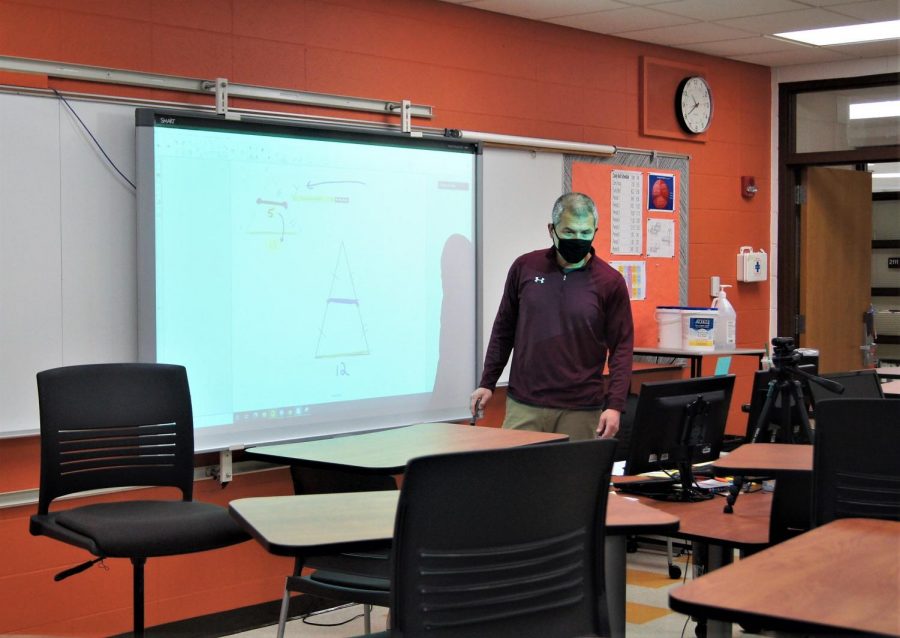
Former student Mr. Paul Karnstedt graduated from LHS in 2005. While he didn’t plan on being a teacher at his hometown high school, he tran
sferred from Warren, as both his brother works here and this school offers substantial benefits for teachers like him. Now that he is back, he has noticed many differences and similarities between the time he went here and the present day.
A Familiar Campus
In comparison with LHS a couple decades ago, Mr. Karnstedt pointed out how the building has barely changed. Besides the new cafeteria and pool, he explains how the halls, buildings and even rooms look predominantly the same.
With the orange, black and white theme, the high school has not changed much since past generations have been here. While nostalgic, many believe that these walls could use a touch-up. From the time when it was built, some of the school’s halls and rooms of LHS have never been modified. Both a good thing and bad thing, it still reflects the history that Libertyville High School holds; students from decades in the past walked in the same halls we walk in now.
A New Generation, A New Dynamic
On the other hand, 2002 graduate Mrs. Hawver believes one of the most significant changes within our high school happens socially. From the time she went to LHS, she gained a perspective of how students’ interactions with each other have changed over the years.
“It was very cliquey when I went to school — like those old movies where everyone sticks to one group,” she said. “Now I feel like groups are more fluid. There’s more inclusivity.”
From the introduction of new clubs to the influx of diverse students from across the globe, LHS has brought everyone together, both physically and socially. Additionally, while the welcoming of our high school has changed, our spirit and pride have not.
The introduction of cell phones has also not only sustained the amount of social interactions between others, giving members of the school the ability to connect in a way unlike any other, but it has also allowed learning to become more efficient; increased access to information, enabling personal and interactive education, and has improved effectiveness and organization in all areas, all of which were only just starting up 20-30 years ago. Since 1917, the change from chalkboards, to white boards, to smart boards, technology has always been a major facilitating tool for learning. Overall, each generation has been shaped by technology in different ways. Mr. Karnstedt was in high school during the transition from physical work to a more Internet-integrated classroom
“We never thought about things like AI taking jobs when I was in high school,” Mr. Karnstedt said. “Now that’s real.”
Keeping the Spirit Alive
But technology can’t change everything. Mrs. Hawver holds a very positive experience of high school, full of sports, clubs and so much more.
“There was a lot of community support and school spirit,” Mrs. Hawver said. “Football games were like in the movies — the whole community came. I do think we still have good school spirit today.”
As time goes on, some things change and others don’t. One thing LHS has always been known for is our spirit, from senior traditions to Friday Night Lights football games. Even decades ago, students were still practicing their intense pride for this school. One thing that everyone values is belonging to a community, which LHS undoubtedly offers.
In the sports world, LHS alumnus and current assistant athletic director Mr. Chris Davis recounts the many changes and constants that have affected athletics since his graduation in 2004.
“I think the number of sports we offer has increased a lot since I was here,” Mr. Davis said. “Lacrosse was just starting when I was a student. Now it’s a full IHSA sport.”
With the addition and evolution of many sports, there are more opportunities available than past years, according to Mr. Davis, who participated in a substantial number of activities such as band and cross country.
From Student to Teacher
One of the most important changes these alumni went through is the transition from student to teacher, walking in the same halls as they did years before.
“It’s interesting knowing some of my former teachers as colleagues now,” Mr. Karnstedt said.
This same feeling of coming full circle is a feeling that many of our teachers share.
“It’s surreal running into people I grew up with and now seeing their kids as students,” Mr. Davis said. ”There’s some definite times where you blink and you’re like, oh, it seems like just yesterday that I was a student here.”
When students become teachers, their focus changes from one thing to another as well.
“The biggest difference is what you prioritize,” Mrs. Hawver said. “As a student, it’s your social life. As a teacher, it’s your students.”
When students are brought full circle back to where they graduated, it evokes a sense of familiarity and a need to give back to the community that once helped them.
“It’s wild to think I used to walk these same halls as a student,” Mrs. Hawver said. “Now I’m the one grading essays.”
![Mr. Scott Brzezinski poses for a photo while working at ShurWay Moving in Libertyville where his cousin Mr. Eric Brzezinski also works. He appreciates that LHS prepares students for their future by providing a variety of opportunities. “[There are] a lot of different resources that LHS has between colleges and counselors,” he said. (Photo courtesy of Mr. Scott Brzezinski)](https://www.lhsdoi.com/wp-content/uploads/2025/02/Mr.-Scott-Brzezinski-Photo-2-1200x1200.jpg)