

In 1835, George Vardin became the first settler in the area he called Vardin’s Grove. According to the National Archives, just two years later, the growing settlement was renamed Libertyville. While the community has seen businesses come and go, the buildings that decorate Main Street have been a staple in the community for over a century.
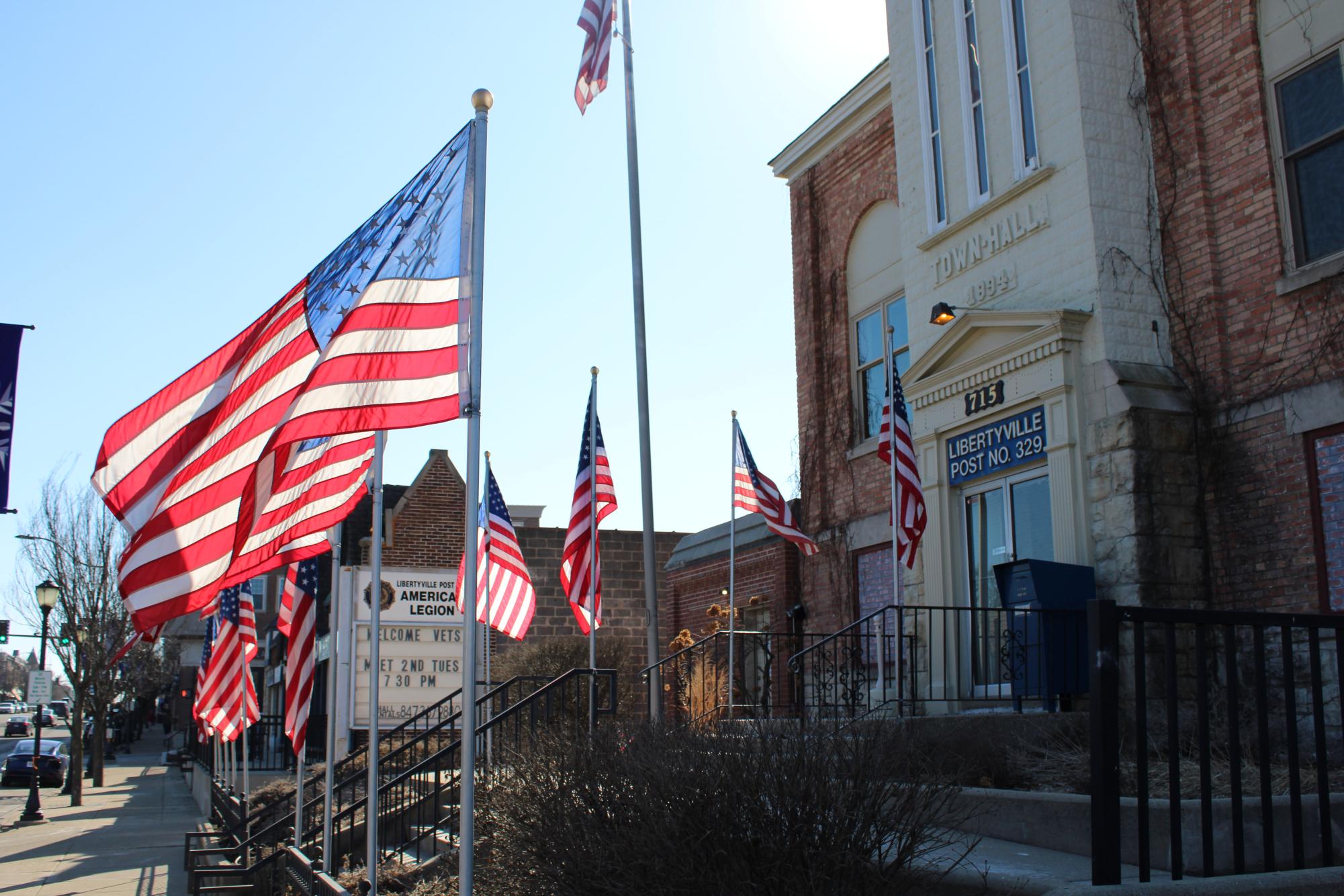
Town Hall
Fifteen years after its first settlement, Libertyville was established as a township government. Local government was originally conducted from a local schoolhouse near where Picnic Basket is today.
“Township government was actually established in Illinois in 1850, so it’s older than the Village of Libertyville, which was incorporated in 1882,” Mrs. Jenny Barry, Local History Librarian at Cook Memorial Library, said.
In 1860, ten years after its establishment, the Township purchased the Congregational Church building, located on the same lot as the current town hall.
April of 1894 was special as a three-member building committee was elected, including Martin Mellody, J.E. Holcomb and the famous Ansel B. Cook, who served as the chairman of the committee. Together, they approved plans for a one-story building and a stone basement.
Designed by architect Mr. William W. Boyington and built by William D. and Frank Price of Chicago, this project cost $3,500, which equates to about $116,000 today. After its completion in August of 1894, the first event held in the building was the Lake County Democratic Convention. Since then, this building has hosted township annual meetings, political conventions, lectures and entertainment, agricultural exhibits, rehearsals and performances as well as dances, balls, suppers and banquets.
“Today, it is owned by the American Legion, and they use it for their activities and rent it out as an event space,” Mrs. Barry said.
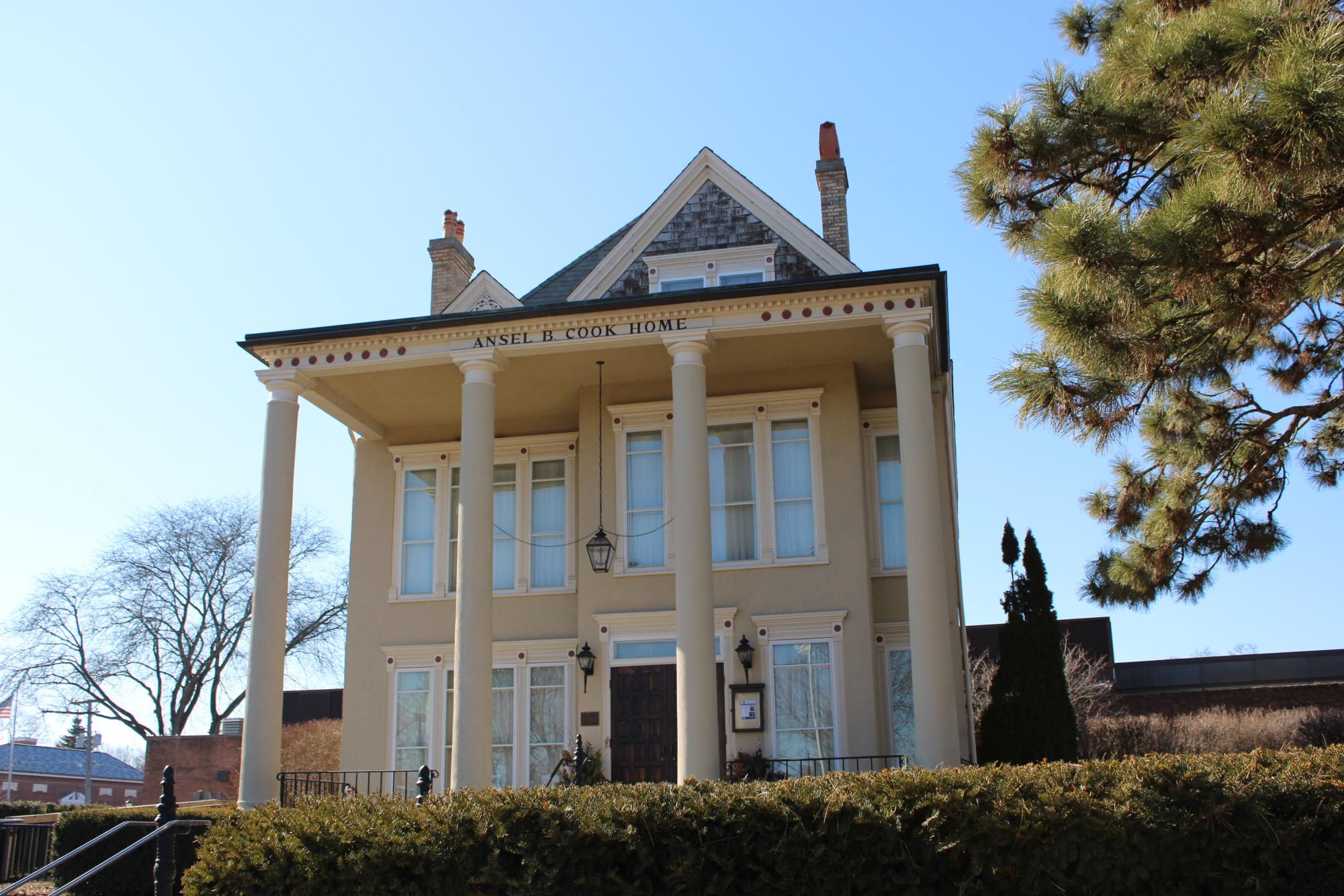
Ansel B. Cook Home
In 1835, the land that we now know as the Cook Home was the site of Libertyville’s first permanent dwelling: a singular room log cabin. By 1837, this building became Libertyville’s first post office.
Over 30 years later, in 1870, Mr. Ansel B. Cook purchased the property and completed the current home construction and design by 1878.
“The Cook Home was first built as a summer or country residence for [Mr.] Cook, who was a masonry contractor in the city of Chicago,” Mrs. Barry said.
After the death of Emily Cook, Ansel B. Cook’s wife, in 1919, the house and land were donated to the Village to become a library and park. The house transformed into the first Cook Memorial Library, which opened in 1921 with exterior changes made to reflect a 1920s library style.
While the library expanded into the building behind it, the current Libertyville Historic Society renovated the house to become a Victorian museum representative of the time the Cook family would have lived there.
Many remember the Cook Home fondly as their childhood library.
“There’s one retired librarian who remembers that the reference books were kept in the butler’s pantry, and she would pull out the drawers to reach the encyclopedias,” Mrs. Barry said.
Listed on the National Register of Historic Places, locals and visitors alike are still welcome to step inside. The building is open to the public on Sundays during June, July and August, as well as select Saturdays in December.
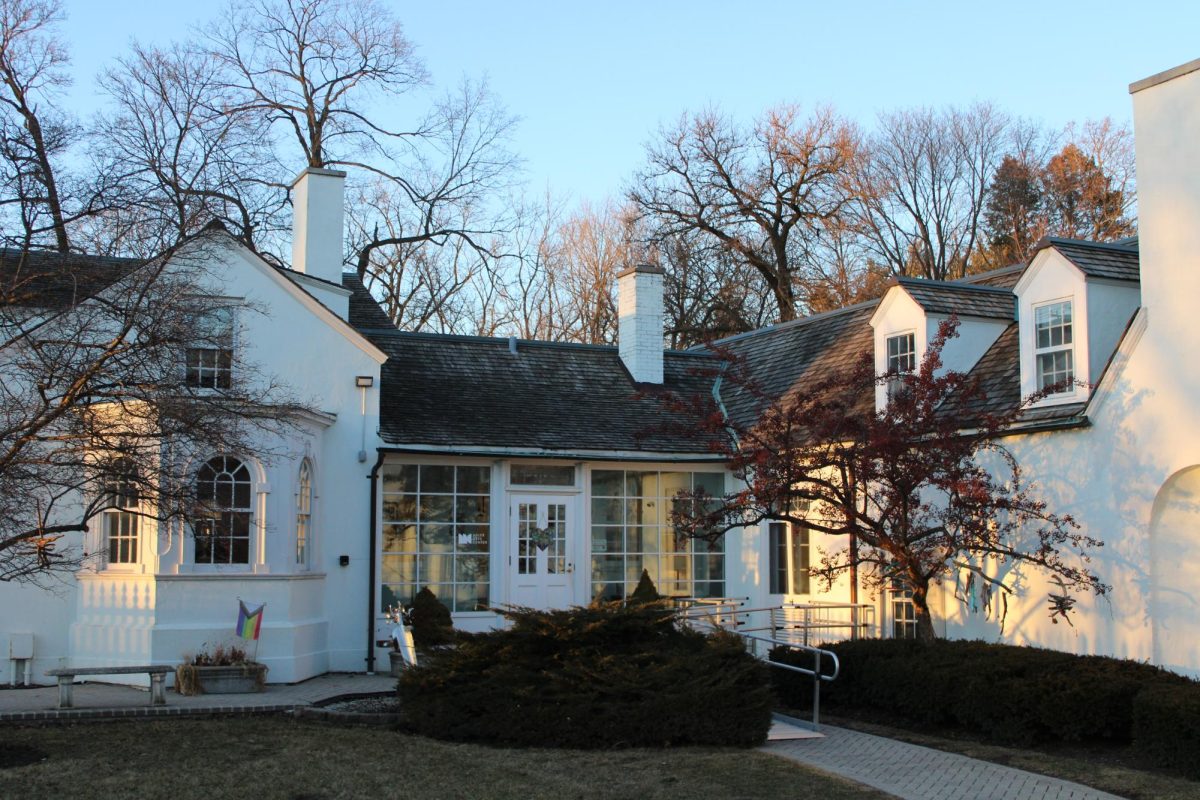
Adler Arts Center
Originally the 1918 estate of renowned American artist David Adler, this building has served as a cultural center and provides lessons in music and art year-round for over 35 years.
David Adler, a prominent US architect, purchased an old farmhouse as a retreat for himself and his wife, Katherine Adler. After her untimely demise in a fatal car crash, Mr. Adler permanently moved to Libertyville, where this building became his personal laboratory and sanctuary. During these years, he expanded the small farmhouse with an additional 23 rooms, making it the building it is today.
After Mr. Adler’s death, leaving no heirs, the building was inherited by his sister Francis Adler. An interior designer herself, she wished to continue and fund local arts.
“Francis, with one of [Mr. Adler’s] good friends, William McCormick Blair, came together, raised funds and created a board of directors, establishing the nonprofit, the David Adler Cultural Center,” Ms. Ellen Williams, Adler Arts Center’s Program & Marketing Director, said.
Today, this cultural center has fueled creativity and artistry through their summer camp programs, private lessons and art classes for all ages.
“I’ve seen [the center] really be embraced by not only this community, but a lot of neighboring communities, a lot of Mundelein, Waukegan, Northern Illinois, Southern Wisconsin areas too,” Ms. Williams said.