


POLICE:
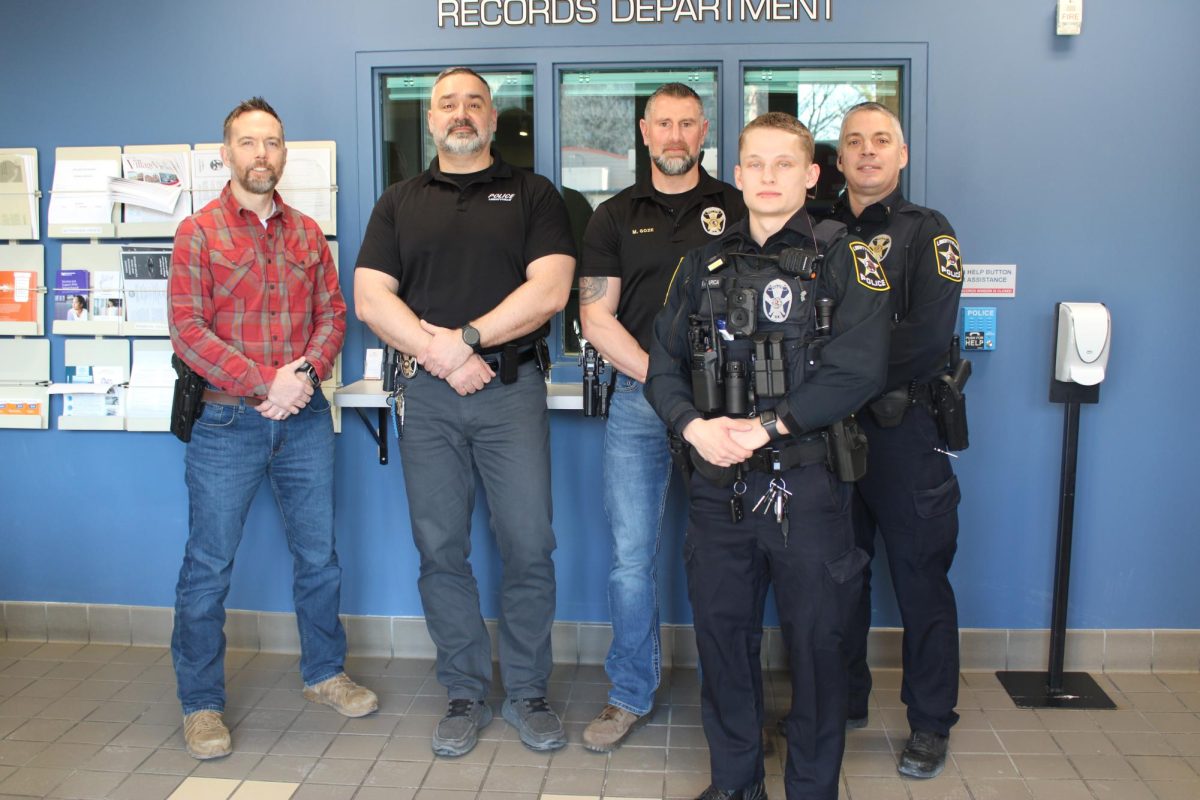
Located just off of downtown, the Libertyville Police Department is home to officers serving a wide range of roles, from patrol officers to investigators and specialized units. Around town, officers are a familiar presence in their signature white, blue and black squad cars, keeping the community safe and providing security at events like Libertyville Days and t
he annual Tree Lighting ceremony.
Officer Caitlin Schulien has been in law enforcement for almost three years, previously training police canines for contracting companies before coming to work at the LPD. Schulien mainly conducts patrols and responds to 911 calls in the community.
“Realistically, we are the people that, whatever you need, you call us, we’re going to help out,” Officer Schulien said. “So even those involved in activities they shouldn’t necessarily be doing, we’ll help that person before doing any kind of law enforcement. Our number one goal is to help.”
The service-first mentality is shared across the department, from new officers to seasoned detectives who have spent decades becoming accustomed to the unpredictable nature of police duty.
Detective Ben Wood has worked in law enforcement for 21 years. Originally aiming to work
in the crime labs, Wood eventually found his path leading him to the LPD, where he now works in background investigations. Over the course of his career, Wood has seen firsthand how unpredictable police work can be. No two days look the same, and adaptability is essential.
Officers respond to a variety of calls, ranging from situations as serious as domestic violence to seemingly minor but urgent concerns like trying to rescue a cat from a tree.
“Someone had a bat in their house, and there’s three or four officers trying to figure out how to get this animal out of the house,” Detective Wood said. “[There’s] a bird in their chimney, and we’re trying to open all the doors using whatever we can find to figure out how we can protect ourselves and also get this animal out of this house for this older individual.”
While moments like these may not be what you see on the dramatizations of a police TV show, they highlight the central idea of law enforcement; officers are problem-solvers first, tackling whatever situation the community places in front of them.
This same service-oriented mindset extends beyond patrol and investigative work and into the department’s leadership, materializing in its approach to community engagement.
Deputy Chief of Administration (DCA) Matt Goze has served in the civilian world for 28 years after serving in the military police of the US Army for four years. Goze’s title of Administration entails a lot of paperwork, making his favorite part of working in and being a part of the community the people he works with.
“It’s not like the glorified part of police work, but what makes my job very rewarding is the people I work with here,” DCA Goze said. “We have a really good department full of officers and admin staff, and we all have a really solid
relationship here.”
Building trust with the community goes a long way for any law enforcement job. Without building trust, it’s hard for first responders to adequately perform their duties.
“We try to engage with the community through a number of different events,” DCA Goze said. “In Libertyville, we’re really fortunate that we do have a good relationship. We have a good relationship with all the schools, a lot of the businesses and a lot of the residents here. They really support us.”
PARAMEDICS:
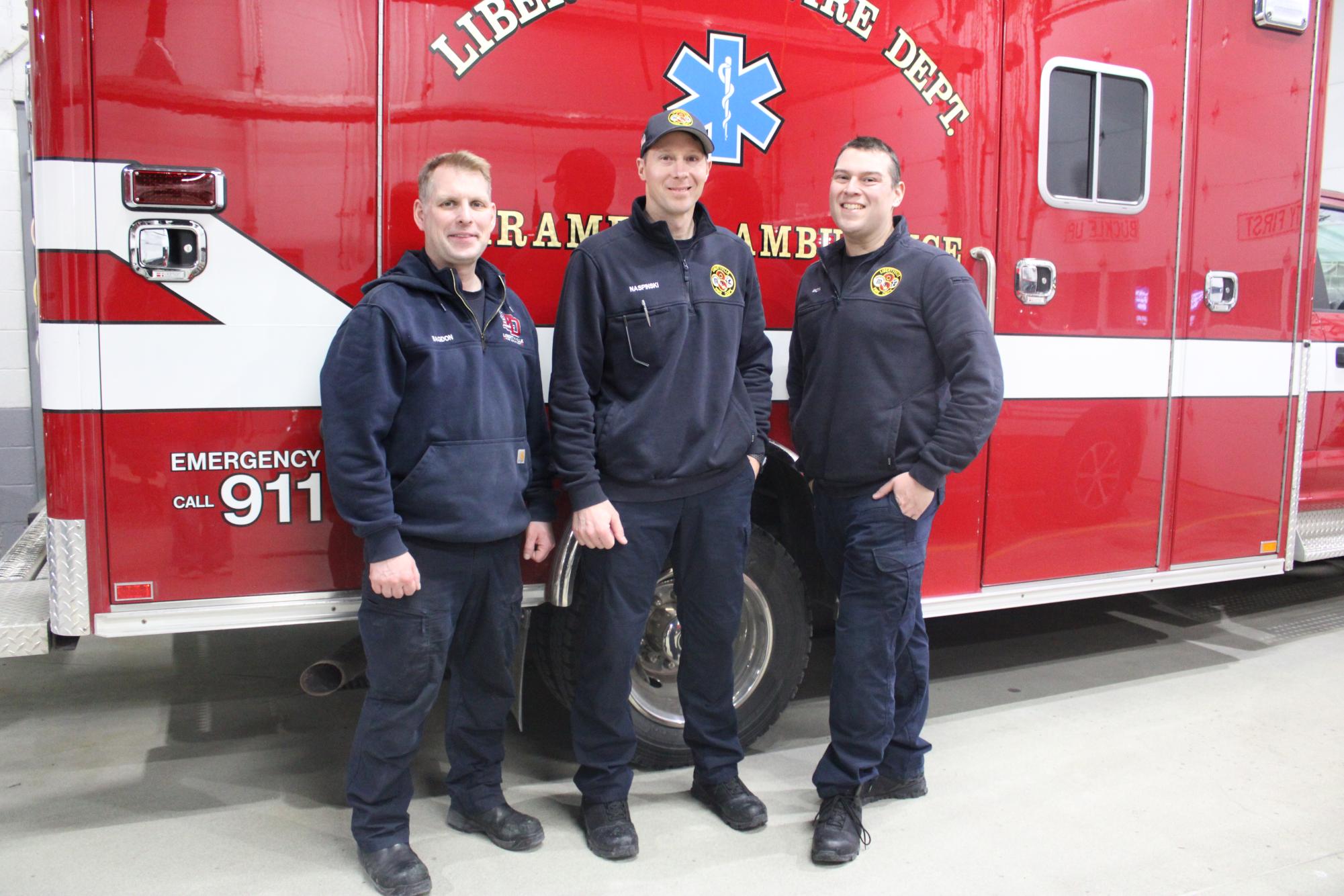
Paramedics work out of Libertyville’s fire stations alongside the village’s firefighters, responding to medical emergencies throughout the community. They are often the first medical professionals on the scene, providing critical care to patients in a variety of situations, from minor injuries to life-threatening emergencies. No matter the situation, paramedics must be ready to act quickly and decisively.
To become a paramedic, candidates must complete roughly a year of specialized training, which includes classroom instruction, ambulance ride-alongs to gain hands-on patient experience and clinical rotations in various hospit
al departments. In doing this, they learn how to handle everything from trauma cases to cardiac emergencies, giving them a well-rounded understanding of patient care. Many trainees also practice in simulated emergencies, learning how to make split decisions under pressure while coordinating with other first responders.
Like many first responder roles, the job comes with emotional challenges. Paramedics regularly jump head-first into stressful and sometimes tragic situations, and over time, those experiences can weigh heavily. Yet, the job also has its rewards.
“I mean overtime, the longer you do this, there’s a lot of bad stuff,” paramedic Brian Bagdon said. “Every now and then, you have good calls where there’s a positive outcome. That’s why we keep doing it.”
Paramedics rely not only on their training but also on cooperation from the community to perform their jobs safely and efficiently. Awareness and consideration from the public can make a critical difference during an emergency, helping crews navigate safely to those in need.
“If you see somebody, whether it’s a fire department vehicle, public works [or] people working on the side of the road, slow d
own and pull over. A lot of people don’t do that, [and] they try to outrun you,” emergency responder Bill Bending said.
Beyond responding to emergencies, paramedics play an important role as educators and advocates within the community. They teach residents about the best safety practices, CPR, first aid and how to respond in emergency situations, helping to prevent injuries and save lives even before a crew gets to the scene.
“Community outreach is important,” first responder Dave Naspinski said. “We do Lunch in the Park on Fridays, go to schools [and] things like that. I’m a technician, so helping kids and babies stay safe is an important part of my job.”
For paramedics in Libertyville, their job is a mix of medicine, quick thinking and community engagement. Every call presents them with a new challenge and the opportunity to make a difference in their community, reminding them why they chose a career that is as demanding as it is rewarding.
Firefighters
Connor Pyne is both a firefighter at the Libertyville Fire Department and head of recruitment for the Libertyville area. Inspired by his father’s 30 years of service as a firefighter, Pyne decided to take up the mantle himself and enter the cadet program at the College of Lake County straight out of high school, and then to the fire academy. From there, he became a full-time firefighter in Libertyville, where he continues to save lives to this day.
The Fire Department not only includes the classic interpretation of what firefighters do, but also the work as an Emergency Medical Technician (EMT) as well.
“A call might require some more manpower, so the people on the fire engine also are trained paramedics, because they might also have to help the ambulance crew,” firefighter Pyne said.
Every fire station in Libertyville also has a handful of ambulances on standby if the situation calls for it.
“That’s why someone might see an ambulance following a fire engine sometimes, because we have to be able to respond to different types of calls at different times,” firefighter Pyne said. “That’s why ambulances are needed.”
Though flexibility in tough situations is certainly essential, other attributes can make a well-rounded firefighter. They have to be able to conduct themselves with integrity when in the public eye. They also have to show kindness within the station as well, since a unit has to trust one another with their lives.
“You have to be good with people,” firefighter Pyne said. “It’s a people job. We’re in the public all the time, whether we’re in schools, giving lessons, community events, or helping someone stay calm when they’re in a tough situation. At the end of the day, it’s part of the job.”
While the public appreciates the incredible work of firefighters as a whole, whether it’s saving people from burning buildings or helping an entire highway full of people when a car crash occurs, consideration for the mental health of first responders has flown under the radar for some time. Firefighters, paramedics and other first responders are thought to be made of steel when they save people, but they also have to take home what they see daily.
“We see things that normal people are not supposed to see, and we just have to compartmentalize it sometimes so we can get the job done, but it doesn’t magically leave our heads,” firefighter Pyne said. “We gotta talk about it, and we gotta help each other.”
While there are official places to receive help for one’s mental health as a first responder, they can always be improved. Wider awareness of mental health as a whole is also a large factor in the improvement of a firefighters’ well-being so that they can truly consider getting the help they need.
“It’s an ego thing, when people like us hear from others that we are somehow invulnerable to hurting, we never think about what we might need,” firefighter Pyne said. “Sometimes we just gotta put that to the side and help each other out to get better, because at the end of the day we’re people.”
All first responders also have to deal with the stressful schedule of working for 24 hours straight, sometimes more.Their schedule follows a timeline of one day on and two days off, so a firefighter spends an entire day at a station before being able to rest and recuperate.
“Sometimes it’s great when I get to rest and sleep for two days after a hard job, but sometimes when I get six calls after midnight, it’s hard to get any rest for those two days, so it’s just inconsistent sometimes,” firefighter Pyne said.
Pyne prides himself on bringing in new talent to the Libertyville fire department. Anyone interested in becoming a firefighter can call the number 847-362-5664 or email [email protected] to organize a ride along or a shadow day with the fire department.