


Awkward silence? Check your phone. Don’t want to make eye contact in the hallways? Check your phone. Stressed about the future? Check your phone. At some point, this distraction stops being a habit and becomes a reflex—it has for me.
This goes beyond screen time. Every minute of our day, our brain is occupied. From walking through hallways to right before falling asleep, there’s always blue light that keeps us company. With endless scrolling, small bursts of dopamine are never far away.
Even before phones, there was no space for quiet moments in my life. I hated sitting down and being alone with my thoughts. I brought a book on every car ride, or I talked to a friend when I was supposed to be silent. For the longest time, I hated yoga, reading without music or any other task that let my mind wander.
With phones in the equation, that instinct to avoid only became easier—and not just for me. I know of friends who scroll in the shower, open TikTok instead of their homework or turn on a show rather than deal with their future. And this constant escape may be doing more than shortening attention spans; it might be training avoidance.
Over the last few years, I’ve particularly noticed a rise in avoidance among teenagers, in myself and those around me: avoiding difficult conversations, avoiding boredom and even avoiding the uncertainty of the future. With this avoidance, we’re losing even more than we realize. We may be becoming fluent in distraction and out of practice with reflection.
While it is the unfortunate truth, in life there is always hardship, change and discomfort. People will always get hurt, and just when you’re comfortable with how everything is, the world will shift beneath you again. It’s overwhelming. But by scrolling past our emotions instead of understanding them, our generation is forgetting how to feel deeply–and more importantly, how to heal.
We’re seemingly stuck in conflict, the ones we help create, as well as the political and societal turmoil around us. And it’s just so tiring.
But exhaustion does not have to mean helplessness. Yet, when every difficult thought is met with the opportunity to scroll, discomfort becomes something to escape rather than something to work through. We need to understand that the problem is not that we’re overwhelmed, but the fact that we rarely stay still long enough to understand why this discomfort is present in the first place.
Boredom once forced us to daydream. Silence made room for self-awareness. Even discomfort was a place for growth. But what once was space for our thoughts to fill is now just a constant of mind-numbing commotion. Those small moments of reflection disappear, and along with them, the growth potential.
Still, I have trouble sitting with my thoughts. I prefer playing music while getting ready or calling when doing my homework. More often than not, I open Instagram when I’m avoiding thinking about my homework, and it’s only now that I’m understanding the detrimental effects.
This isn’t a personal habit—it’s become a cultural phenomenon. In a culture obsessed with productivity, achievement and constant engagement, even stillness can feel wasteful. Avoidance can disguise itself as diligence, limiting our conscious and emotional growth.
If we are unable to accept our range of emotions, what does that do to our relationships? Is the only relationship the one between us and the screen, leaving us alone outside of that?
The problem is not that we feel overwhelmed. It is that we have become too practiced at fleeing what overwhelms us. If avoidance is becoming a habit, then reflection has to become one too. Because relationships, resilience and self-understanding all ask the same thing of us: to stay in the moment. And if we keep treating every hard emotion as something to scroll past, we risk becoming better at escaping life than engaging with it.
And maybe this matters more as we move into the future. Adulthood will ask more of us, not less. We’ll face larger setbacks, have more intimate relationships and hold an even greater uncertainty for the future. If we meet every discomfort with escape, we risk bringing this avoidance into adulthood with us. But if reflection can become a habit too, then maybe, the quiet moments we resist will be the ones that prepare us the most.
The future will always be uncertain. The question is, do we keep scrolling past uncertainty or is now the time to learn to face it?
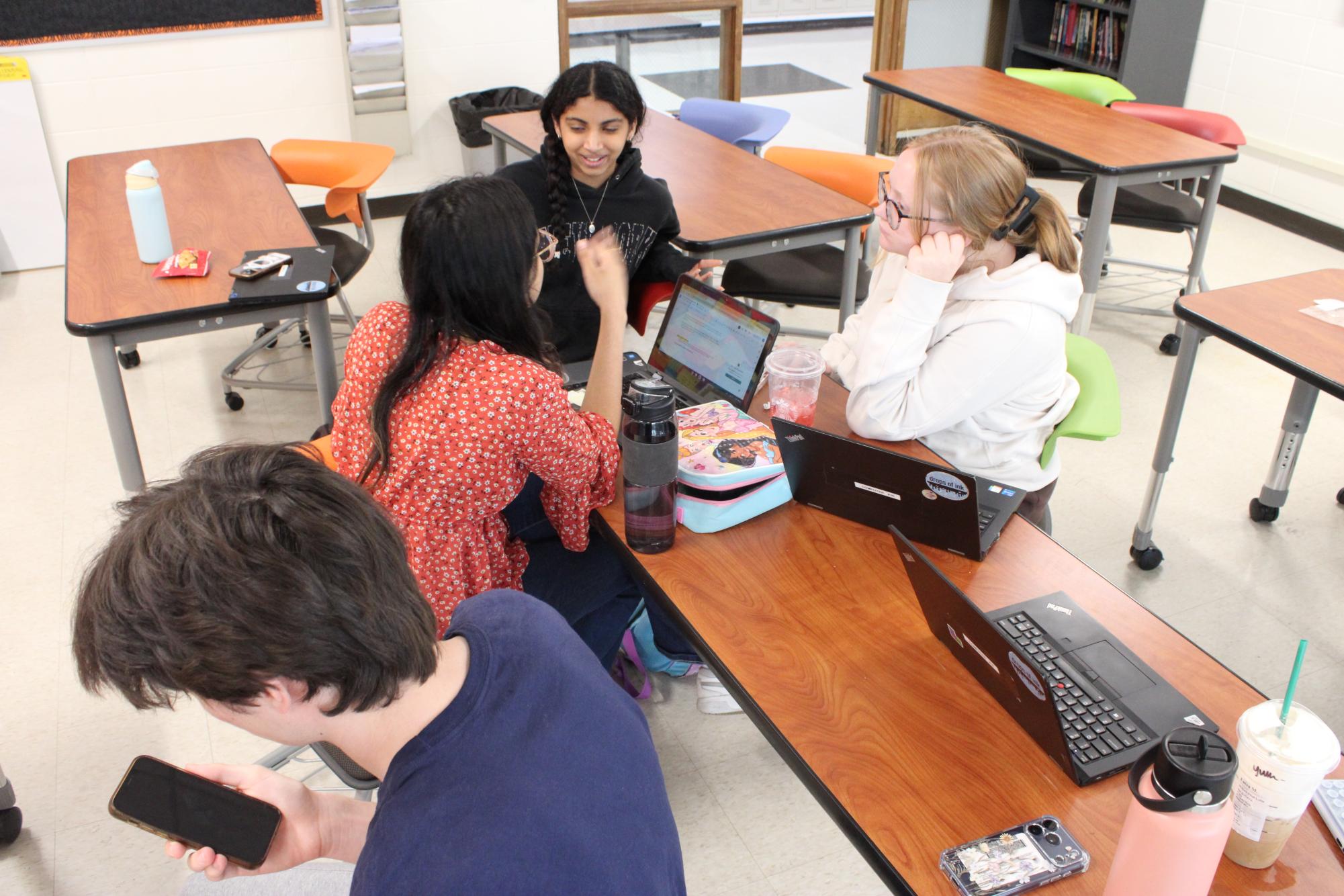
![Drops of Ink seniors struggle with completing assignments as the school year comes to an end. “One of the reasons [for burnout] is because we've been doing the same thing for years, and so after a while, it becomes routine,” a DOI senior said. “So, well, this is the last little bit, so I don't think I really need to put in 100% effort anymore.”](https://www.lhsdoi.com/wp-content/uploads/2026/05/staff-ed-1200x800.jpg)