


In the 2023-2024 school year, more than 25 million U.S. readers got their news from student journalists’ work at the college level, according to a study from the Center for Community News at the University of Vermont. Imagine how this number would increase when it includes the work of high school students.
When someone hears the word journalism, it can be hard not to think of reporters coming up and asking personal questions or chasing breaking news. This is the exact power behind journalism: it holds the power to amplify unheard voices and inform people beyond just the surrounding community.
Student journalism brings this power directly into schools, close-knit communities and into the hands of local citizens. Student journalism transforms individual voices into a collective idea that can share truth and growth, leading to meaningful change in the community.
Whether it is a 60+ college staff or a 10-person high school staff, being a part of a community of journalists offers a platform for dialogue to be fostered. Youth and young adults see the world differently from adults, and this doesn’t have to necessarily be a bad thing. They are surrounded by different realities, such as school life, friendship struggles and trends often overlooked by the media. While professional reporters may be looking at what will make a global headline, student journalists are looking for stories that will bring awareness to everyday issues or news. Topics like mental health struggles or the latest restaurant meetup spot can sometimes only be best explained by those who live through them everyday: students. Student journalism gives a voice to these young adults who are seeking their platform to allow for themselves – and others who don’t get the same opportunity – to be heard.
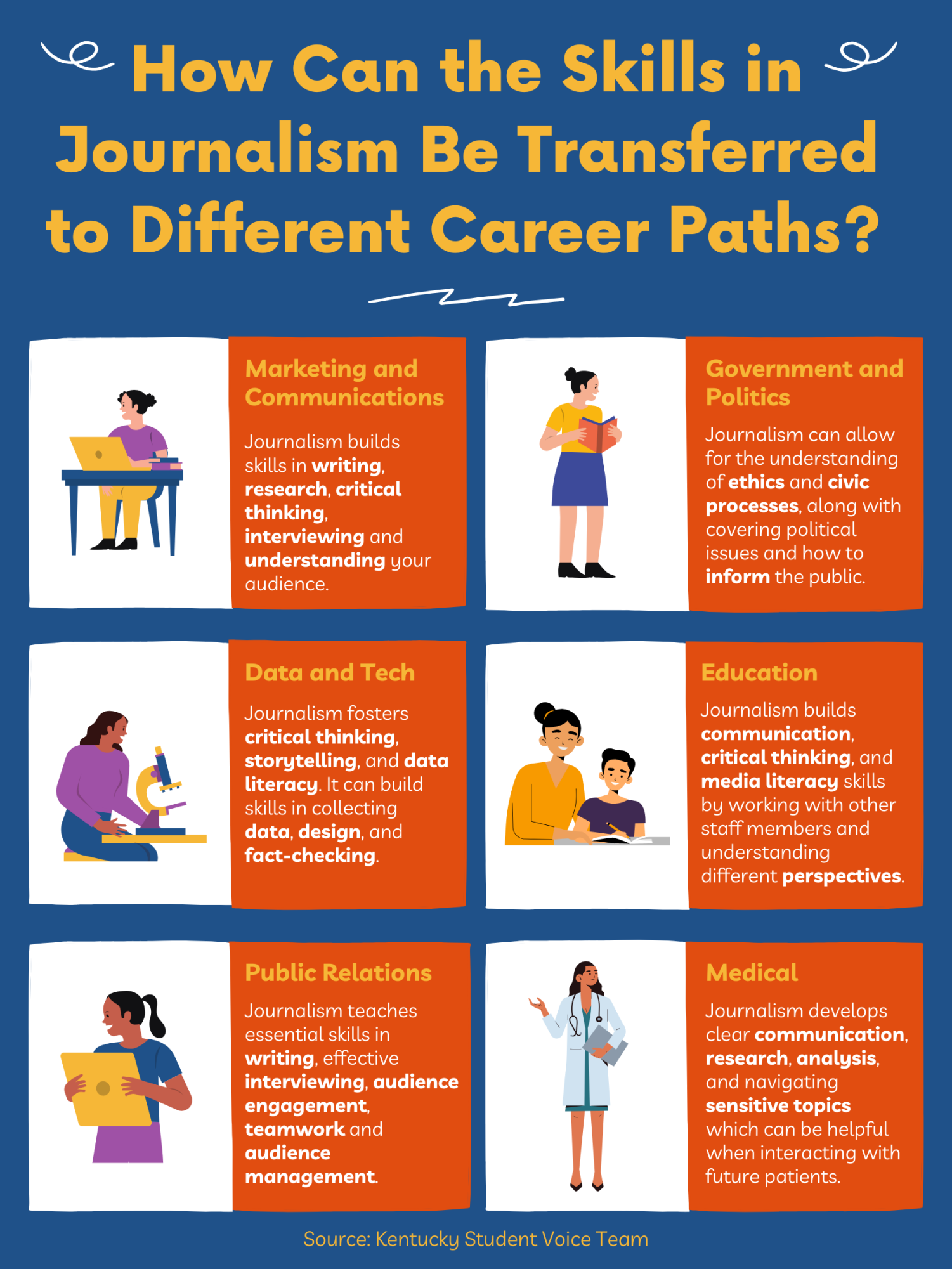
When student journalists are part of a community of reporters, this prepares them for what is ahead of them as future citizens of the world. Interviewing and interacting with students and staff can build critical thinking and empathy, preparing students for any career by understanding diverse perspectives and the importance of verifying facts. By collaborating with a staff and an advisor, this prepares students for managing workplace conflicts, understanding collective strengths and prioritizing and scheduling tasks, whether they’re working an office job, doing food service or teaching an elementary classroom.
Confidence can be gained in the student newsroom through interacting with authority figures, leading a staff as an editor and working through mistakes. Confidence – alongside practical skills like researching, graphic design and writing – can be transferable skills to any profession.
Employers look for these same skills learned by working in a student newsroom of ambition, communication, problem-solving and confidence during the hiring process, according to Indeed. Specifically, 61% of employers find confidence to be one of the top three traits that they look for in new hires, Forbes found.
Student journalism also creates a sense of connection. When other students see journalism written by their peers, it creates a sense of comfort. Some may even see themselves in it. Some may even find the courage to speak up about an issue just by seeing it in their community paper.
In this era, misinformation is spreading faster than ever. 86% of Gen Z turn to social media for news, according to The Harris Poll. By being a part of a community, student journalists are able to engage in conversation through trusted interactions instead of relying on preconceived bias through social media.
Without student journalism, many students’ stories would remain unheard. The struggles that happen within friendships, classrooms and homes would be unknown. Identity struggles or societal pressures like following trends or which college to go to often don’t make those global headlines, but they are the everyday life that students live through. Why not recognize them? Student journalism allows for these stories to not be just “typical teenage problems” but to be recognized by those same 25 million readers who read student journalism annually and finally feel seen among society.