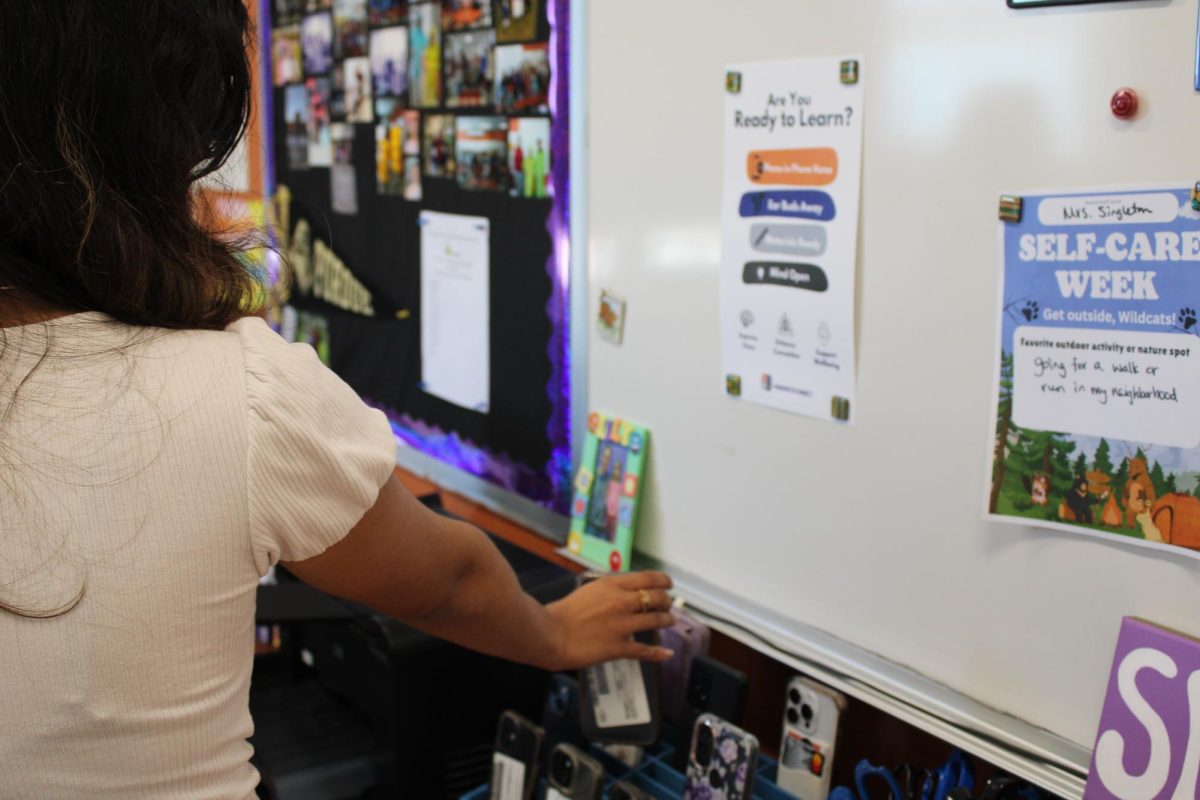


![A stack of phones, one with over 70 notifications, shows just how central devices are in today’s day and age. “I’ve heard people say [that they] would love if Snapchat just didn’t exist, or social media didn’t exist, because it impacts everyone’s mental health,” Agee said.](https://www.lhsdoi.com/wp-content/uploads/2025/12/IMG_9921-1200x800.jpg)
Society has never been more connected, yet somehow, more alone. Every buzz promises conversation, and every scroll satisfies a need to belong. With a constant stream of notifications from Instagram, Snapchat and other messaging apps, people today are displacing their focus, prioritizing online interactions over face-to-face conversations.
Growing up with the unprecedented global reach of technology, students in particular are dependent on this constant connection.
“It’s nice to be able to reach out to people whenever I’m in a pinch,” senior Mathias Klemp said. “It’s also kind of nice to see what people are up to and how their lives are going, especially not being able to talk to everyone every day.”
But constant connection also brings constant interruption. As reported by the University of Michigan’s Medicine Department, a study shows that on a typical day, teenagers receive around 203 notifications a day. Each notification may come with a friend in crisis, life-altering news headlines or other attention-seeking situations.
On the other hand, phones inherently provide a new ability to create support systems; however, the hundreds of notifications, infinite scroll and various algorithms keep teenagers highly trapped to their screens. Some are scared that teenagers today rely on them even when spending face-to-face time with their friends.
“Sometimes when I’m hanging out with my friends, we’re on our phones the whole time, and then we can’t think of things to do,” junior Savannah Agee said. “We get bored whenever we try not to be on our phones, and I feel like if we were used to not being on our phones all the time, that wouldn’t be a problem.”
In fact, this phenomenon can be backed by science itself. According to Dr. Aditi Nerurkar, a lecturer in the Division of Global Health and Social Medicine at Harvard Medical School, human bodies are wired for short bursts of stress and anxiety. Nevertheless, with access to constant news of wars, passing of laws and other demanding events, nervous systems are being overwhelmed.
By setting Google alerts or turning on notifications for news out- lets, there is no shortage of information received throughout the day, as seen by Klemp himself and his peers.
“I think [being] constantly connected to news has increased how people are afraid of the world in general,” Klemp said. “I think it’s increased the perceived danger that’s around.
Dr. Nerurker argues that our bodies are responding to this stress with doomscrolling, the act of constantly scrolling through large amounts of negative news online and on social media.
“Stress stokes our primary urge to scroll,” Dr. Nerurker said. “We’re hypervigilant and scanning for danger. The more you scroll, the more you feel you need to.”
Trapped in a vicious cycle, many parents argue that this connection distracts students from not only their education but also interactions with those in person rather than online. Further, this neurological loop can make in-person interactions or access to news feel slower-paced than the rapid-fire of online access.
This isn’t just a problem teenagers face. Dr. Brenda Nelson, the Prevention & Wellness Coordinator at LHS, explains that adults are susceptible too.
“We all have an algorithm, and we’re all affected by it,” Dr. Nelson said. “What makes teens different from adults is that they’re already in a more emotionally sensitive stage of development, so their vulnerability tends to be higher.”
More importantly, for many teens, phones don’t just fill time — they fill silence. When conversations stall or moments feel awkward, almost every teenager can be seen reaching for their phone. Most of them don’t even recognize this habit forming, finding discomfort even in the most natural of quiet.
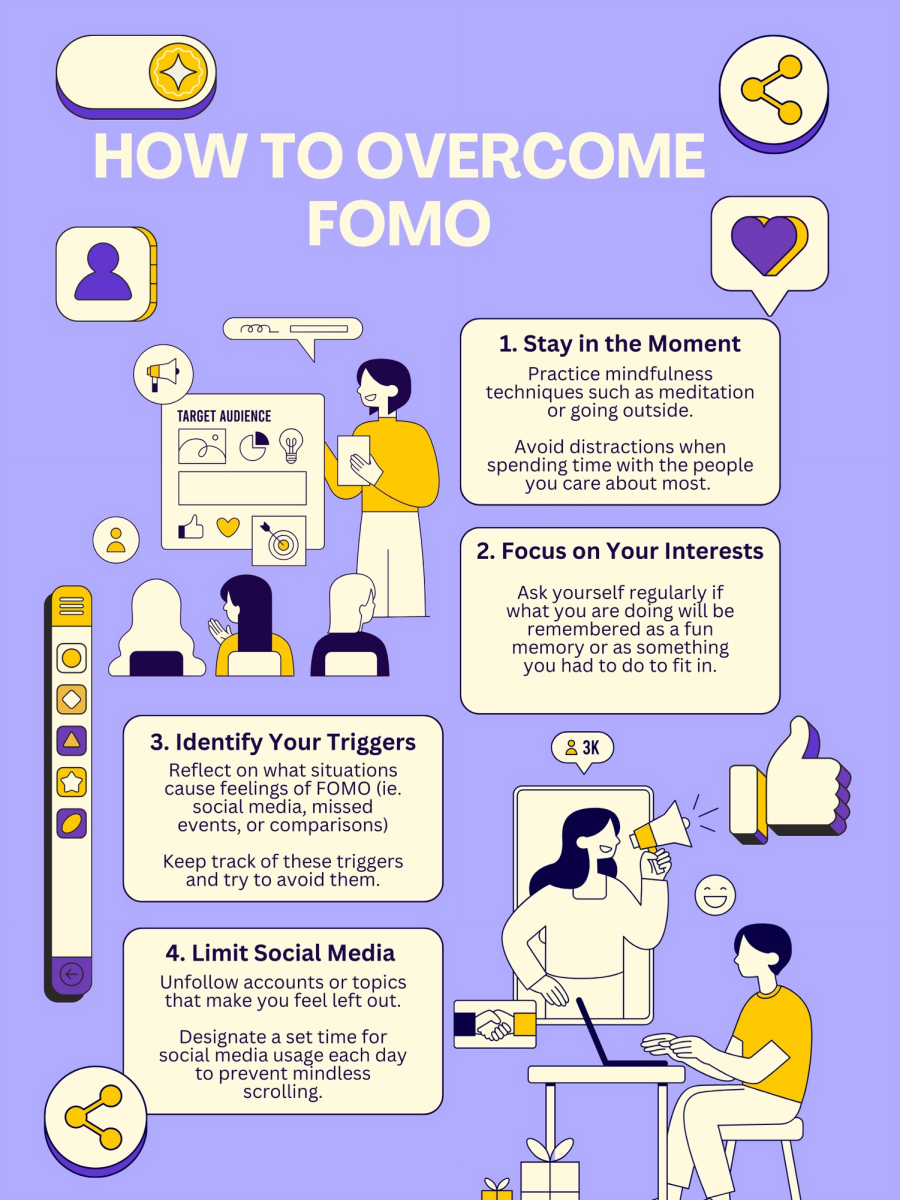
Still, connection doesn’t have to come at the cost of presence and genuine human connection. In chasing onscreen connections, we risk losing those beside us. To cure this symptom of this epidemic, it’s time to turn off notifications, monitor screen time and stop using important tools as a substitute for connection, awkwardness or any other human interaction.
“I think that the more time that we can spend outside without our phones, the healthier we are, mentally, physically [and] everything across the board,” Dr. Nelson said.
It’s a simple reminder that sometimes stepping away from screens is the first step to truly connecting.