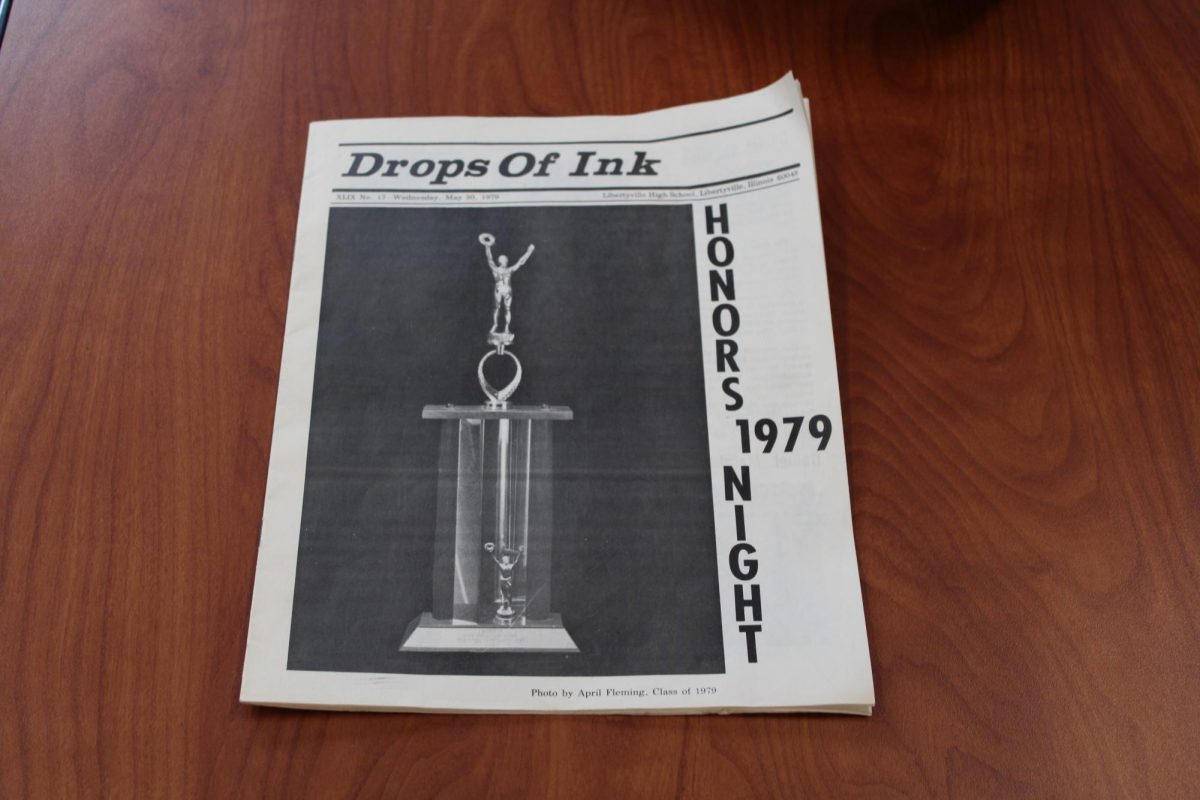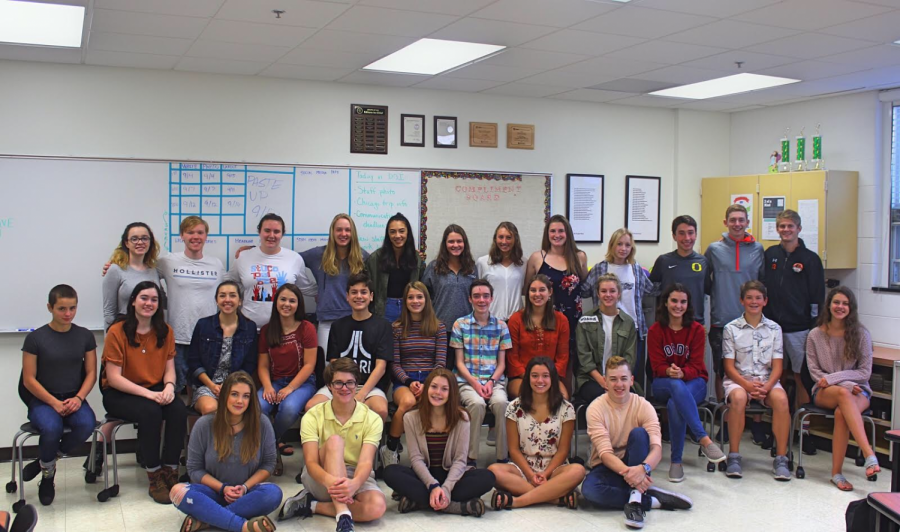


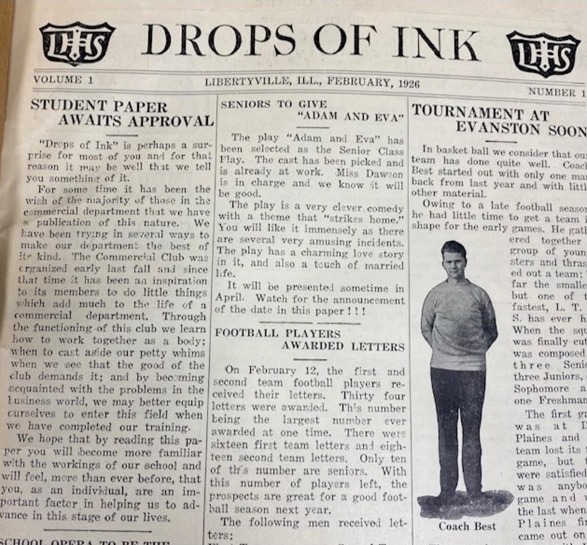
Since the 1920s when Drops of Ink (DOI) first came into existence and started publishing newspapers, DOI tells a story even beyond the words in the articles. It tells the story of the people behind them: student journalists, photographers, layoutdesigners and advisors. DOI values the voice of the school and community around it, reflecting in every issue that comes out. DOI is carried by generations determined to fulfill the legacy behind it, as well as create a new positive voice for the future.
Pressure and Responsibility
Barb Schneider was the DOI advisor from 1982 to 1997. During her time as advisor, DOI won national awards and “Best in Show” in the Journalism Education Association (JEA) and Kettle Moraine Press Association (KEMPA) awards for over five years straight. Her leadership established a recognition that shaped DOI’s legacy, leaving Ms. Dyan Naslund, who took over as advisor in 1997 to 2002, a reputation with both honor and pressure. She knew that DOI didn’t have to match past awards, but she still wanted to uphold the standards.
Due to the editorial board carrying over every year with experienced editors and Ms. Naslund’s dedication to the publication, Drops of Ink was able to get “Best in Show” the next few years. The editorial board knew what would lead the publication to do well in the JEA and KEMPA awards.
“It’s not just a fun school paper,” Ms. Naslund said. “It was considered one of the best high school newspapers in the country.”
During Ms. Naslund’s time as advisor, staff members were eager to use their right to free speech and put out some more controversial stories.
“This is our free speech,” Ms. Naslund said. “We have a right to publish. And I believed in that, wholeheartedly. I believed in the freedom of student journalists to have that freedom of speech, as far as the Supreme Court allows it.”
Growth and Mistakes
In Ms. Naslund’s time as advisor, one story about special education students in contained classrooms showed the importance of producing fair and accurate stories.
“[My staff] interviewed all of these students for their story, but they never interviewed any staff to get their side of it,” Ms. Naslund said. “As an advisor, I completely overlooked it. I didn’t even think about the fact that that particular story wasn’t getting balanced reporting. And so I learned a really hard lesson, because when that story was printed, those staff members were mortified.”
The experience was a wake-up call for the staff and Ms. Naslund as the editing wasn’t just about writing and grammar mistakes, but they also had to make sure that the writing was accurate and represented both sides, as the students’ stories didn’t show the full side of the story without the teachers’ perspectives.
“There are three sides to every story, this person’s side, this person’s side, and then what really is the truth, which is often somewhere in the middle,” Ms. Naslund said.
The editors themselves ended up learning the value of accountability after the staff ended up not getting their stories done on time and left the paste-up for the newspaper hours early. To prove a point to the staff members, the two Editor-in-Chief finished pasting the newspaper and wrote headlines themselves instead of delaying the whole process.
“They put stories in that had things like ‘insert quote here,’” Ms. Naslund said. “We printed a paper with wrong headlines, incomplete stories and it never happened again, but one of the stories was about the new school board, and they wrote a headline that was ‘$5 for the monkey fish pants.’” DOI became more than just a newspaper, but a place for students to gain maturity, take accountability and own their mistakes.
Creativity and Curiosity
Mr. John Reid was a staff member for DOI from the fall of 1998 to the spring of 1999. Always a big fan of Superman, he decided to join the staff to uncover the truth like Superman did as a newspaper reporter.
Mr. Reid loved to dive into his stories and tended to get through them pretty quickly. He challenged himself to write two stories each issue, such as sports and feature writing. He found that he had a lot of downtime after writing his stories, so he took matters into his own hands to get creative.
“I started creating my own parody newspaper, kind of like ‘The Onion,’” Mr. Reid said. “I changed [the headline] to DUH, so it was a parody magazine. And then I would, very quietly, make up my own fake stories.”
Fast-forwarding a few years, with the hopes of continuing the creative spirit, Dr. Paul Reiff took over from 2020 to 2023. He wanted the staff to feel that they are a part of something bigger and create a sense of community in the classroom.
“DOI was student owned and operated, and with just a bit of guidance or support, you could really trust the students to do a really good job and do the right thing and care about what they were doing,” Dr. Reiff said. “All you had to do was provide them with an opportunity to thrive.”
Impact Beyond DOI
The skills learned while being on staff extend far beyond the classroom and careers in journalism. Mr. Reid incorporates skills learned from being on DOI in his 7th grade social studies classroom, such as having his students pretend that they are historical newspaper writers and asking questions with the five Ws and H when exploring the American Revolution.
“I think a lot of those skills fed into being a teacher and the idea behind when I’m working with students, helping them learn how to research, research something [and] helping them learn how to have conversations with people,” Mr. Reid said. “Those interviewing skills come in handy [with] trying to get them to come out of their shell a little bit to feel less awkward about asking so many questions.”
The lessons taught in DOI extend beyond students. For advisors, leading a newspaper staff offers valuable experience with leadership and creating a motivated staff that stands out in the community.
“If you have even just a tiny little inkling of wanting to be a newspaper advisor, absolutely do it because you just learn so much about group dynamics,” Ms. Naslund said. “You learn so much about free press [and] free speech. You know you have to make difficult decisions. And I just think the experience of being a newspaper advisor is invaluable.”
Creating a Community
For decades, Drops of Ink has been more than a newspaper– it’s been a community of voices and passion passed down from one generation to the next: a legacy. DOI continues to inspire generations of student journalists, photographers and layout designers to leave their mark on the school.
“The paper goes all the way back to 1920 or something like that,” Dr. Reiff said. “And it’s kind of cool to think how every class is just stewards of this project that keeps getting passed on from group to group to group to group, generation, generation, generation, and everybody’s just trying to keep the standards high and do great work. And I think that’s kind of incredible, that the legacy is like, spanned off as generations.”