

Dystopian fiction has always been popular, but for today’s teens, it feels personal. The worlds of “Wicked” and “The Hunger Games” feel fantastical, yet hauntingly familiar. From Oz to Panem, revolution narratives aren’t just entertainment—they’re emotional mirrors. These stories reflect our real-world anxieties, distrust in institutions and desire for empowerment in a chaotic world.
Every morning, we wake up to a new school shooting, a new domestic restrictive policy or a new collapse of a longstanding government. With our phones in our hands, these headlines find a way into our lives, sometimes even before we’ve woken up. These news cycles lend themselves to a dystopian feel; it should come as no surprise that growing up in this situation makes revolutionary fiction feel emotionally relevant to teens.
In the Hunger Games franchise, Suzanne Collins depicts the Capitol, the ruling fascist government, that enforces laws that perpetuate inequality, government overreach and exploitation. The people from the Districts are seen as lesser than and dependent on their government for all.
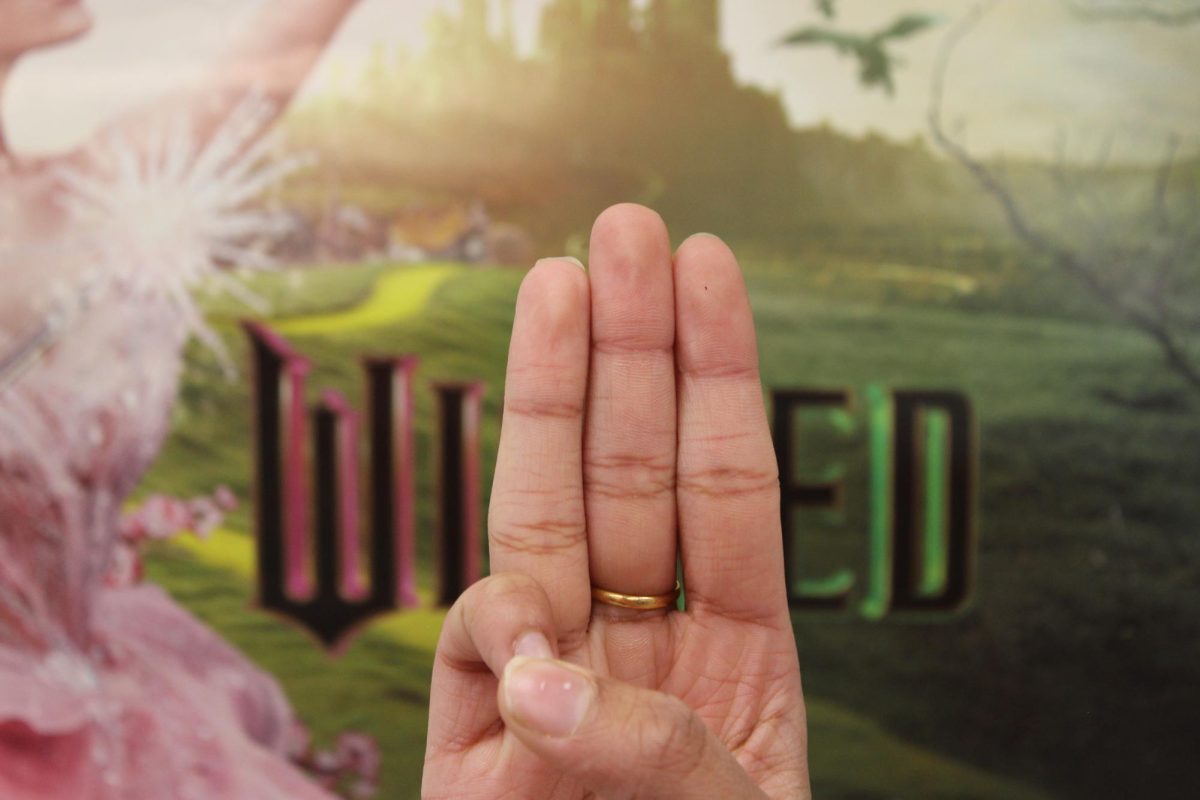
Similarly, in Oz, the magical world of “Wicked,” animals are treated like animals—despite being able to speak, think and interact just like humans. The Wizard and Madame Morrible both manipulate the facts in creating a narrative to make the animals the enemies by spreading propaganda.
Both stories also expose how easily “the truth” can be manipulated by those in power, something our generation recognizes a little too well. In an era of misinformation, algorithmic feeds and fear-mongering headlines, these stories are tinted with a sense of familiarity.
Through these stories, Gen-Z doesn’t naturally trust big systems—government, companies and other executive bodies—so we bond with characters that push back. Aware of the propaganda we may or may not have been fed, seeing leaders lying, systems failing or even simply the unjust rules, we find it difficult to have faith in these cooperations.
Part of the appeal comes from the outsider narratives both stories convey. Most teens know what it feels like to be misunderstood, labeled or underestimated. Elphaba is painted as a villain for a different skin pigmentation, and Katniss is turned into a symbol she doesn’t know how to be. These character arcs mirror the emotional experience of growing up in today’s world.
Watching these same things happen in a world that on the outside looks much different from ours naturally fosters a sense of empathy in Gen Z. With Katniss and Elphaba being punished for becoming role models of challenging authority, it’s easy to relate to feeling misunderstood.
Feeling powerless in the face of possible change, revolution narratives give teenagers a hero to root for and be inspired by in hard times. Katniss, a regular girl forced into leadership, and Elphaba, an outsider who found her voice, are portrayed as accidental heroes rather than chosen ones. They’re like us: not perfect but messy, morally complex and relatable. Characters like these prove that resistance doesn’t require perfection, and it really can be anyone who defies gravity or ignites the spark.
In an uncertain world, Gen Z is finding itself using dystopia to understand its reality through the messages authors try to spread. Both Elphaba and Katniss symbolize that anyone from anywhere is capable of fighting for change. With clear role models, these stories give us a sense of empowerment, clarity and hope. And maybe that’s why we keep returning to these worlds: they remind us that even in the darkest of times, the possibility of change belongs to us.